Google advises against splitting up text for AI search, but questions about result quality remain

2 views
Google advises against splitting up text for AI search, but questions about result quality remain

In an episode of the Search Off The Record podcast, Google representatives Danny Sullivan and John Mueller discussed guidance for publishers and SEO specialists who want their content to appear in answers from search engines and chatbots powered by large language models. Sullivan cautioned against creating short text fragments specifically for AI. The author of the Search Engine Journal article agrees with that advice but believes it sidesteps more difficult questions about result quality and search traffic.

How search is changing with the rise of detailed answers

The author connects the development of AI search with earlier changes at Google. In 2012, the company introduced the Knowledge Graph as a step away from processing strings of keywords toward understanding real-world entities and the relationships between them. Google Search, however, remains the foundation of its new products.

The author believes the answer format has changed considerably: instead of individual results, users may receive a detailed response that covers not only their original question but also several related topics. He links this to query fan-out, an approach that considers multiple related search queries for a single user query. In his view, this changes the conventional model of optimizing one page for one keyword and can affect clicks through to publishers.

Should content be split into fragments for AI?

Some SEO specialists recommend dividing pages into small blocks, based on the assumption that language models find such text easier to process. The author considers this advice arbitrary: a well-organized page already has a logical structure thanks to headings, lists and other HTML elements that readers and machines can understand.

Sullivan said he had discussed the practice with Google engineers and advised against splitting up content specifically for language models. He added that publishers do not need to create separate versions of the same content for AI and the regular web.

He urged publishers to focus on content for people rather than the characteristics of individual systems. Sullivan noted that systems improve over time, so narrowly targeted techniques that may have worked for a particular model will not necessarily remain effective. He emphasized, however, that each publisher makes their own decisions about strategy.

Questions about clicks and source quality

The author argues that the advice to write for people does not address questions about the impact of query fan-out on clicks through to publishers or the quality of pages cited in AI answers. In his view, opportunities for expert publications to attract traffic are shrinking, while Google results sometimes fall short of the expected standard of quality.
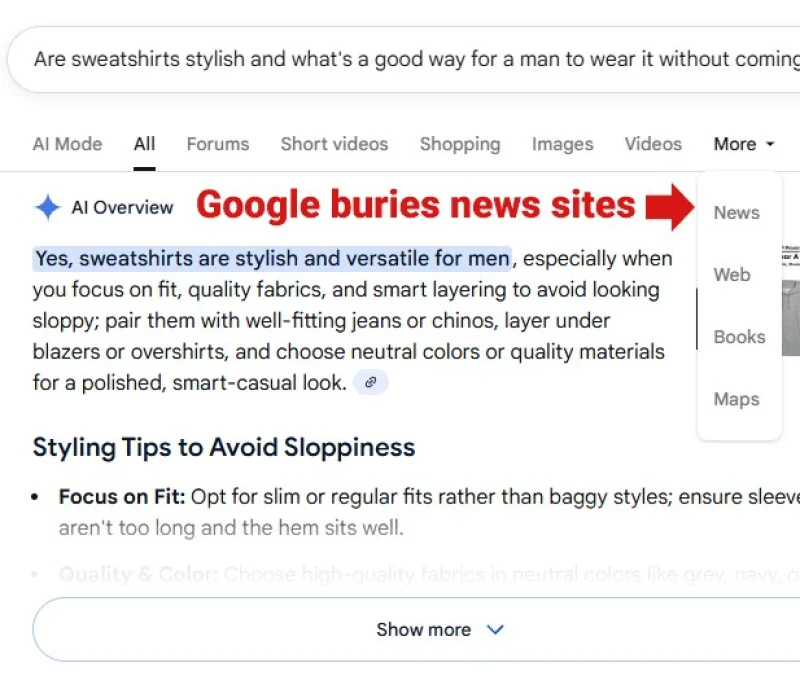
Иллюстрация из первоисточника

As an example, the author described a search about what to wear with a sweatshirt. He said AI Mode cited an abandoned Medium blog with two posts and broken images, a LinkedIn article and an article on a sneaker retailer's website. The author does not consider these sources sufficiently authoritative to answer a question about style. He says he did not choose the query specifically to produce a poor result.

At the same time, the author noted that articles from well-known publications, including GQ and The New York Times, could be found through the “More” section and the “News” tab. He sees their placement there as a sign that expert content is less visible. This single example reflects the author's assessment, but does not by itself establish the overall quality of AI Mode results or the extent of publishers' traffic losses.
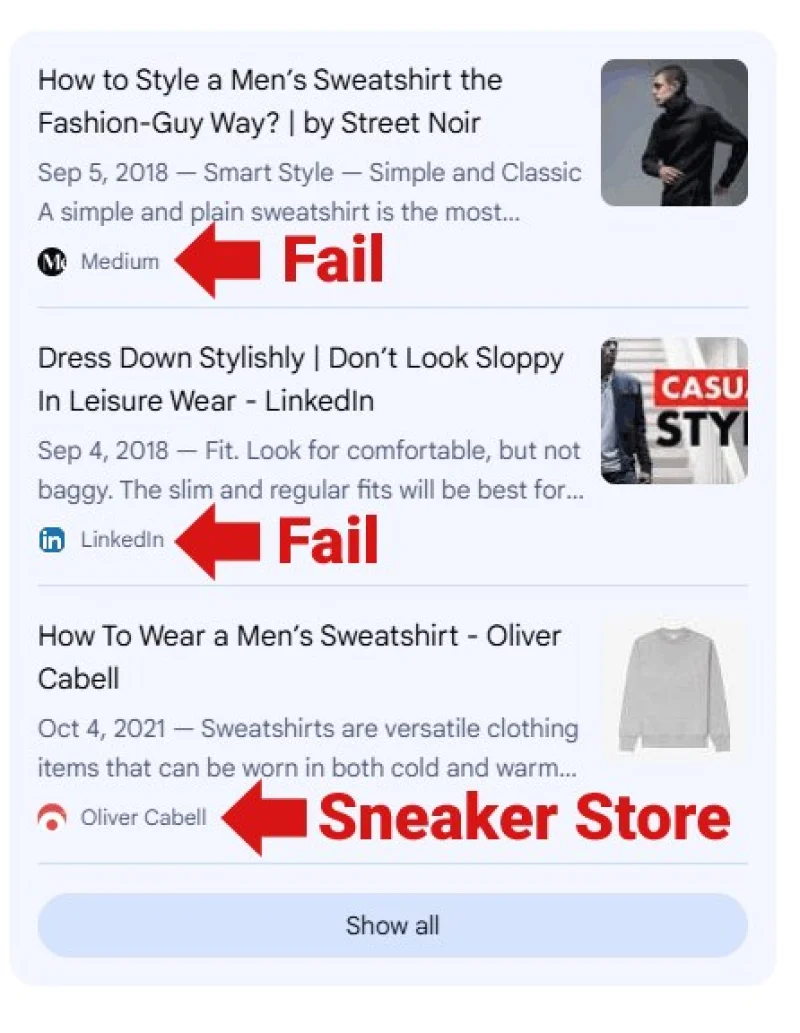
Иллюстрация из первоисточника

Why the debate over names does not solve the problem

The author considers the debate over whether optimization for AI answers should be called GEO, AEO or simply SEO to be secondary. What matters more to him is which sources Google shows users and whether quality publications receive clicks.
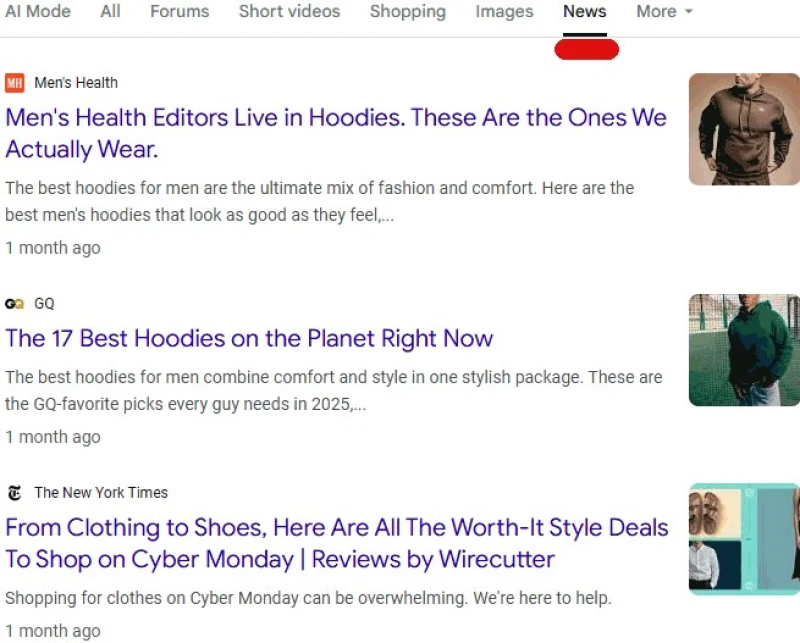
Иллюстрация из первоисточника

In conclusion, he suggests focusing on search result quality and expresses a wish to bring regular search back to the forefront, with Gemini features placed separately. This is the author's editorial position, not a Google announcement about plans to change the product.

Source: https://www.searchenginejournal.com/google-downplays-geo-but-lets-talk-about-garbage-ai-serps/564901/

Discussion

Sign in or create an account, to join the discussion.

JOIN THE ULTRAS

A Telegram channel with exclusive case studies you won't find on the site and the most hard-hitting market insights.

SUBSCRIBE ON TELEGRAM

Traffic arbitrage made simple — articles, news and case studies


Imagine earning money online simply by directing traffic and getting paid for every successful conversion. No product of your own, no office, no bosses. Sounds like a fairy tale? In fact, it’s traffic arbitrage, and for many, it has already become a steady source of income, bringing in hundreds to thousands of dollars a day. But in this field, knowledge is just as important as practice. Where can you find setups that work? How do you avoid wasting your budget? Where can you learn strategies from the pros?

There’s one answer: read traffic arbitrage articles on Traffic Ultras, a niche media outlet. Here, you can make sense of trends, find proven case studies and learn from mistakes. You’ll also find everything you need to know to get started if you’re just entering the world of traffic arbitrage.

CPA arbitrage – articles everyone should read


Today, CPA arbitrage articles are more than just content: they’re comprehensive guides that can replace courses and consultations. They’re written by active media buyers, tested in practice and cover the full range of arbitrage work: from setting up trackers and collecting analytics to scaling setups and launching large teams.

These articles are packed with practical advice:

  • how to prepare a setup around a news event,
  • how to analyze results and optimize creatives,
  • how to choose the right offer without wasting your budget,
  • which details to pay attention to.

You can also find unique case studies involving Facebook, Google, TikTok, UAC and even native advertising.

Important: if you want to understand how to start earning from traffic arbitrage, start by reading these resources. Our site has a convenient structure and internal links. For example, after reading about launching a campaign on TikTok, you can go to an article on warming up accounts or visit the traffic arbitrage forum to ask questions directly.

A traffic arbitrage blog by practitioners

What makes a traffic arbitrage blog truly valuable? It’s not theory, but hands-on experience, real traffic and concrete numbers. There’s no fluff here — just proven methods and up-to-date approaches. This kind of content lets you do more than read: you can apply what you learn to your own work. It’s especially useful if you’re already taking your first steps but don’t know how to get the most out of Facebook or properly test push and pop networks.

A modern traffic arbitrage blog is more than just articles; it’s a complete media ecosystem. Traffic Ultras tracks gambling news, trends across verticals and new approaches to creatives, helping our readers stay up to date on the latest strategies.

You can also find partners, frameworks, scripts and even a team through a traffic arbitrage blog. Collaborations emerge in comments and chats, while media buyers share ideas and experience.

Traffic arbitrage – a blog for beginners

If you’re just starting out, a beginner-friendly traffic arbitrage blog is the best way to enter the industry. This kind of content is easy to follow without sacrificing usefulness, covering everything from terminology to launching your first campaign.

A traffic arbitrage blog helps you avoid classic mistakes: wasting your budget on poor pre-landers, ineffective bridge pages and offers that don’t get approved. It explains the mistakes beginners make, how to communicate with CPA network managers and how to avoid getting banned on Facebook with your first campaign. It’s all based on the authors’ real-world experience.

You’ll also find step-by-step instructions, useful checklists and sometimes free templates and trackers. This makes traffic arbitrage blogs especially useful both when you’re starting out and as you grow. They also regularly publish news to help readers keep up with their vertical.

A good traffic arbitrage blog is a guide to the world of traffic that shows: anyone can earn money by taking a systematic, consistent approach.

Questions and Answers

How do you start earning from traffic arbitrage? Articles and blogs to help beginners

If you don't know where to start, check out the CPA arbitrage articles on our site, which explain the basics of arbitrage and how to work with offers and traffic sources in detail. A traffic arbitrage blog can also be a great resource, with experienced media buyers sharing case studies and tips that even beginners can understand.

Which traffic sources are most effective in 2025, according to arbitrage blogs?

An analysis of leading traffic arbitrage blogs reveals several key sources in 2025: TikTok Ads, push traffic, Telegram Ads, and YouTube Shorts. Formats that generate engagement quickly are particularly effective, and traffic arbitrage articles are increasingly focusing on these channels.

Which verticals generate the most revenue, according to traffic arbitrage blogs?

According to authors of popular traffic arbitrage blogs, the most profitable verticals in 2025 are gambling, Nutra, dating, and crypto. An arbitrage blog helps beginners quickly learn the ins and outs of each vertical, including rules for creatives and approaches.

Which arbitrage blog publishes real case studies?

The most valuable resources present each case study as a step-by-step story, from testing to ROI. That's how the Traffic Ultras arbitrage blogs are created: by practitioners who share not only their successes but also their failures, helping readers learn from others' experiences.