
Language models can formulate convincing answers even when they are wrong or lack up-to-date information. One way to reduce this problem is grounding: anchoring an answer to external information. RAG does this by searching for relevant documents and passing the retrieved excerpts to the model.
This matters for SEO because a page’s content can make its way into an answer not only through the model’s training data, but also through an external search performed while processing a query. However, a source appearing in search results guarantees neither its selection nor the accuracy of the final answer.
What is RAG and how does it differ from grounding?
Grounding is a broad term for anchoring an AI answer to factual data. Various approaches can be used, including model tuning, prompt engineering and RAG.
RAG, or Retrieval Augmented Generation, combines text generation with information retrieval. The system finds documents or individual excerpts in an external source and adds them to the context the model uses to formulate an answer. The source can be a web search or an organization’s internal database.
This approach is particularly useful for information that has changed since the model completed training and for questions about a company’s internal documents. Instead of retraining the base model, the system can look up the necessary information in an external repository. According to the author of the original article, this is usually cheaper than retraining or fine-tuning.
RAG reduces the risk of hallucinations, but does not eliminate it entirely: the quality of the answer depends, among other things, on the sources retrieved and how the model uses their content.
Why language models hallucinate
A hallucination is an answer in which a model confidently presents incorrect information. The original article cites OpenAI’s position that training and evaluation processes can reward a model for providing an answer, even if it is wrong.
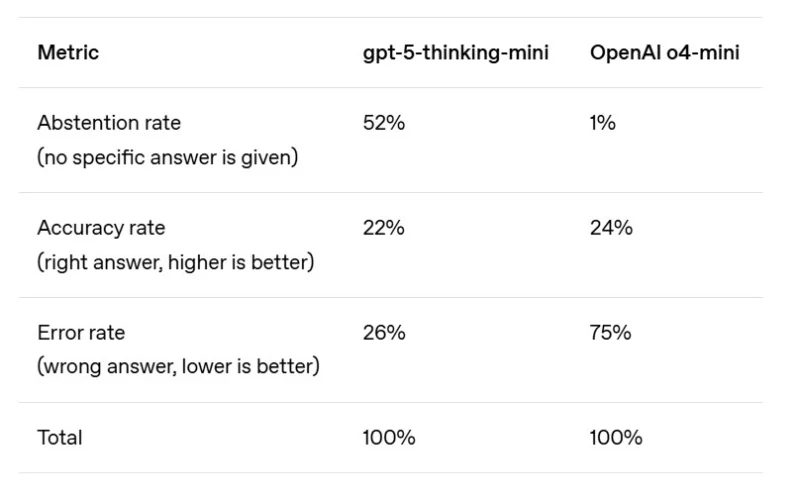
Language models are trained to recognize patterns in large datasets and predict sequences of tokens. Facts that appear repeatedly in the training data may be reproduced more reliably than those mentioned rarely. But, as the research cited by the author notes, errors can occur even when the training data itself contains no errors: the model’s training objectives can produce them.
Post-training methods, including reinforcement learning from human feedback, and grounding answers in sources can reduce hallucinations. Nevertheless, a plausible-sounding statement is not in itself a fact check.
How the RAG process works
Broadly speaking, the system first retrieves relevant data, then adds it to the query or the model’s context and generates an answer based on it. The specific steps depend on the architecture: for example, retrieval may be triggered by a query or when certain conditions are met, rather than necessarily following a universal check of the model’s confidence.
For semantic search, queries and documents can be represented as vectors. Their similarity is assessed using measures such as cosine similarity or Euclidean distance. The retrieved excerpts are passed to the model so it can supplement its answer or draw on information absent from its training data.
Hybrid search combines semantic matching with keyword search. This approach helps account for both the wording of the query and its context. In an agricultural study cited in the source, the base model achieved 75% accuracy, rising to 81% after fine-tuning and 86% when fine-tuning was combined with RAG. These results apply to a specific study, not to all RAG systems.
Parametric and non-parametric memory
Parametric memory refers to patterns learned by a model during training and encoded in its parameters. They help the model work with language and predict sequences of tokens. The temperature setting affects the randomness of selection: a higher temperature makes the output less predictable, while a lower one makes it more restrained.
Non-parametric memory is information available outside the model, such as in a search index or structured database. RAG draws on both: the language patterns learned by the model and specific information retrieved from external sources.
What RAG changes for SEO
If a system uses web search to obtain context, a page’s visibility for a relevant query may increase its chances of being considered as a source. The author of the original article also suggests that inclusion in training data on the relevant topic may influence source selection, but does not establish any direct guarantee that the source will be selected.
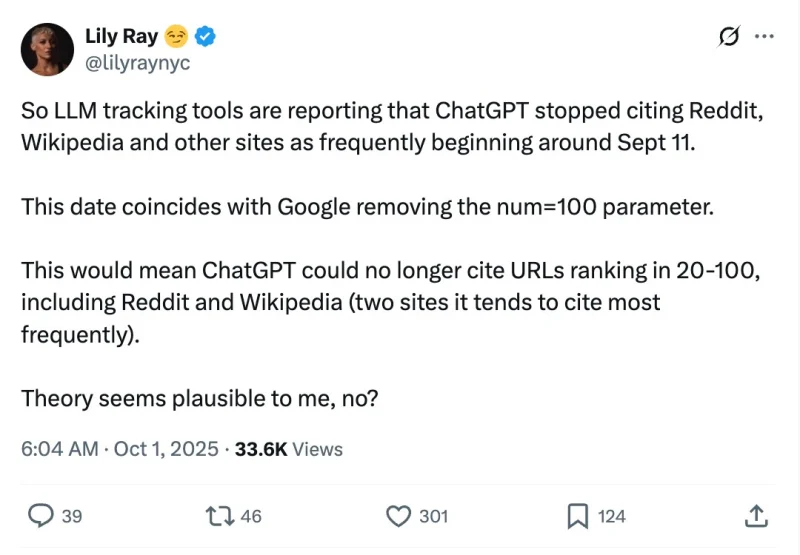
The training data of an already released model cannot be changed instantly by promoting a website. This makes a presence in external indexes important for search with RAG. Systems are also dependent on the search sources available to them. The article claims that after Google discontinued the num=100 parameter in September 2025, the number of citations in ChatGPT fell sharply because of restrictions affecting third-party partners that collected search results. This is the source author’s account of the situation, not a universal rule for all systems.
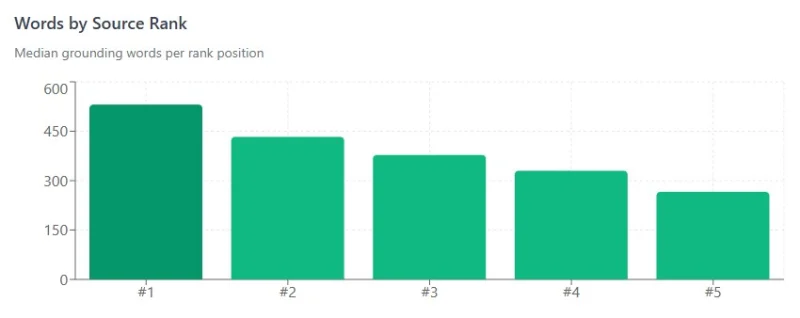
The author’s recommendations largely align with standard SEO practice: answer the main question near the beginning of the page, clearly identify entities, avoid ambiguity, build a clear structure with headings and add useful original information. Lists and tables can help present information concisely when they suit the user’s task.
Splitting text into excerpts involves a trade-off: shorter excerpts are easier to retrieve precisely, while longer ones preserve more context. The author suggests a guideline of around 200–500 characters, but it should be treated as a practical estimate, not a proven universal size for every retrieval system.
The article continues a series on information retrieval that previously covered disambiguation, inclusion in model training data, vectorization and transformers.
Source: https://www.searchenginejournal.com/information-retrieval-part-4-sigh-grounding-rag/568371/
Discussion
Sign in or create an account, to join the discussion.