
Artificial intelligence is changing how people find information and interact with brands, but many shifts in marketing began long before large language models became widely available. Shoppers were already moving between search, social media, reviews and creator recommendations. AI is accelerating these trends and making the limitations of conventional methods for evaluating channels more apparent.
In an article published in November 2025, the author suggests looking beyond search traffic: considering how audiences move between platforms, working with creators and communities, and not relying solely on last-click attribution.
The customer journey spans multiple platforms
A person might first see a product on TikTok or Instagram, then look for reviews on Reddit, watch a review on YouTube and only then search for the brand on Google or buy the product directly. In this chain, the final search click can easily receive all the credit for the sale, even though interest began earlier and elsewhere.
According to an analysis by Rise at Seven's SEO and data teams, which covered 1.5 billion searches for the most popular keywords across five channels, the path to purchase took anywhere from two days to 10 weeks and could include up to 97 interactions. In the study, Google accounted for 34.5% of total search volume, YouTube for 24%, Instagram for 20.9% and TikTok for 16.7%. The average consumer used 3.6 platforms before making a purchase.
These figures apply to a specific analysis and not necessarily to all shoppers and categories. Search also works differently across platforms: on social media, people may discover a product through an algorithmic recommendation without entering an explicit search query.
Why attribution deserves a rethink
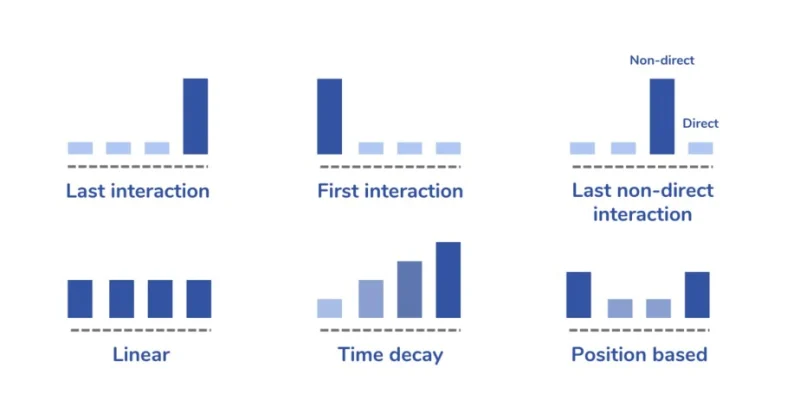
Last-click attribution assigns the result to the channel through which a user arrived immediately before converting. It's convenient, but it can overvalue branded search and other touchpoints at the end of the funnel, while overlooking the creators, communities and platforms where a person first learned about a product.
As alternatives, the author discusses time-decay models and position-based models that account for the first and last touchpoints. Choosing a model does not remove the need to understand the audience: it's difficult to fully track the contribution of every interaction in a complex customer journey.
What AI is changing in search and paid advertising
Search answers that don't require a click through to a website existed before generative AI. In the author's view, AI Overviews are putting further pressure on click-throughs, especially for informational queries at the early stages of the funnel. AI Mode may also affect queries related to choosing and comparing products. At the same time, the author sees large language models as a supplement to search rather than a complete replacement and advises carefully checking their recommendations.
The article also cites Seer Interactive data on paid search: when an AI Overview was present but did not mention the brand, the number of paid clicks was more than 78% lower. Even when no AI Overview was present, the decrease was 20%. The original article does not explain the comparison conditions in detail, so these figures should not be applied to every campaign. The author suggests that the habit of getting answers without clicking through may also affect user behavior in search results without an AI Overview, but this remains a hypothesis.
AI also has practical applications for professionals: the author mentions Cursor and Lovable as development and prototyping tools. However, new tools do not eliminate the need for high-quality search engine optimization, a technically sound website and clear product positioning.
Creators, communities and trust in content
Recommendations from people and discussions in communities help audiences evaluate products outside a brand's own channels. The original article cites the following figures: 90% of marketers associated creator content with higher engagement, and 83% with increased conversions; 61% of consumers trusted creator recommendations more than brand advertising. The article does not specify the methodology behind these surveys.
Working with creators requires more than reach. Brands need to understand who truly influences their audience and create products and experiences people will want to share. Reviews and complaints on third-party platforms also shape perceptions of a company and may be reflected in language model responses.
At the same time, an increase in automatically generated content does not guarantee attention or trust. The author expresses concern about the spread of misinformation in search and social media and believes that impersonal content can worsen the user experience.
The role of email and owned channels
An email list gives a brand a way to communicate with its audience that is less dependent on search and social platform algorithms. The author believes email is suitable for most brands and recommends collecting and storing audience data in-house, as well as developing owned platforms and content.
AI can help with research, personalization and email distribution, but it cannot create meaningful messages on its own. In the author's view, sending mass emails with repetitive content and no recognizable brand voice is more likely to reduce engagement.
How to align paid, owned and earned channels
Paid campaigns help reach new audiences and bring back people who have already shown interest. Owned channels include a website, content and an email list. Earned reach occurs when other people talk about a brand and share its content. As the cost of customer acquisition through advertising rises, the author suggests paying more attention to the latter two areas.
In practice, this means SEO, PPC and social teams working together, adapting content for different formats and reviewing the entire user journey, both on and off the website. The author identifies a help center, FAQs and product pages, a consistent tone of voice, handling reviews and complaints, the website's technical condition and content quality as priorities.
The main task is not to replace one channel with another, but to understand their roles and create a consistent experience for the audience. Search engine optimization remains part of this work, even if search clicks alone are no longer enough to evaluate marketing.
Source: https://www.searchenginejournal.com/the-impact-ai-is-having-on-the-marketing-ecosystem/562027/
Discussion
Sign in or create an account, to join the discussion.