
A slot game’s visuals should not only attract attention but also help players understand what is happening on screen. In an interview with G3 Newswire, Koala Games representative Chris explained how the studio develops slot graphics, from a small tile in the casino lobby to the animation and finished game.
The lobby tile and the first impression
According to Chris, players usually first encounter a slot as a small tile in an online casino lobby. The team therefore considers its design as early as the logo creation stage: the font, materials, colors and surrounding details must convey the game’s character, while the title must remain legible at a small size.
Where the composition allows, a character is added to the tile: a face looking toward the player immediately gives it personality. A striking color and a clear visual focal point are also important. The design is adapted to the operator’s requirements while keeping the game recognizable.
Once the slot starts, the graphics and animation should guide the player’s eye toward important symbols. Chris aims for players to understand what to look for and how the main feature works within just a few spins.
From classic aesthetics to a cohesive visual world
Koala Games draws on the aesthetics of classic slots: rich colors, gleaming gold and glowing elements. The studio aims to give them a crisp, modern look while maintaining a visual hierarchy. For example, the most important symbol might be brighter than the others, while secondary symbols should not draw attention away from it.
The studio’s first release, Voltage Blitz® Vortex, established this approach. It combines familiar bells, gold bars and sevens with constantly moving electric orbs. The artists brought together hand-drawn graphics, 3D elements and animation, planning the composition, color and lighting of the entire screen in advance.
How mechanics shape the theme and graphics
Work begins with an explanation of the game mechanics, after which designers and artists discuss possible themes. According to Chris, a theme should not just look striking; it should also provide suitable symbols and a clear way to represent game features. For example, a ship’s wheel can visually represent a wheel feature.
One of the artists then usually creates a rough concept of the entire screen using sketches and reference images. At this stage, it is easier to change direction than after the symbols have been drawn and animation has begun.
Voltage Blitz Vortex was initially developed around a traditional Irish luck theme. However, the team decided that the calm, cheerful graphics did not match the energy of the mechanics. The turning point was a photograph of an old plasma ball shown by one of the designers. This led to the electric orbs and the vortex above the reels: coins spin faster, and the electricity becomes increasingly intense.
Tools, animation and control over the result
Once the concept is approved, a second artist joins the project. For the final graphics, the team uses Photoshop and 3D tools, including ZBrush, Marmoset Toolbag and Substance Painter. According to Chris, artificial intelligence has also become part of the process: generated materials are edited, redrawn and refined to match the chosen direction. He says the main priority is maintaining control over Koala Games’ visual identity.
The animators work primarily in Spine and After Effects. Like the artists who create static graphics, they need to understand the game mechanics. A technical artist helps translate the original vision into a working version, and the team regularly reviews builds. Developers and testing specialists also help preserve the artistic vision.
Experience at previous studios and the development of the Voltage Blitz series
Chris said that at Games Lab he learned to create graphics for an entire game under deadline pressure. Working alongside fantasy card game illustrators also influenced his palette: when someone pointed out that the slots were starting to look somewhat gray, he returned to brighter colors.
At Konami, he gained experience creating games for land-based casinos and working with their visual traditions. As an example of a modern interpretation of that approach, he cited Celestial Flame Coin Rise®, with its familiar gold coins and a glossy red glass orb entwined by a golden phoenix. At Playtika, where Chris was art director, he was responsible for assessing graphic quality and directing animation. That experience strengthened his belief that artists need to understand game features.
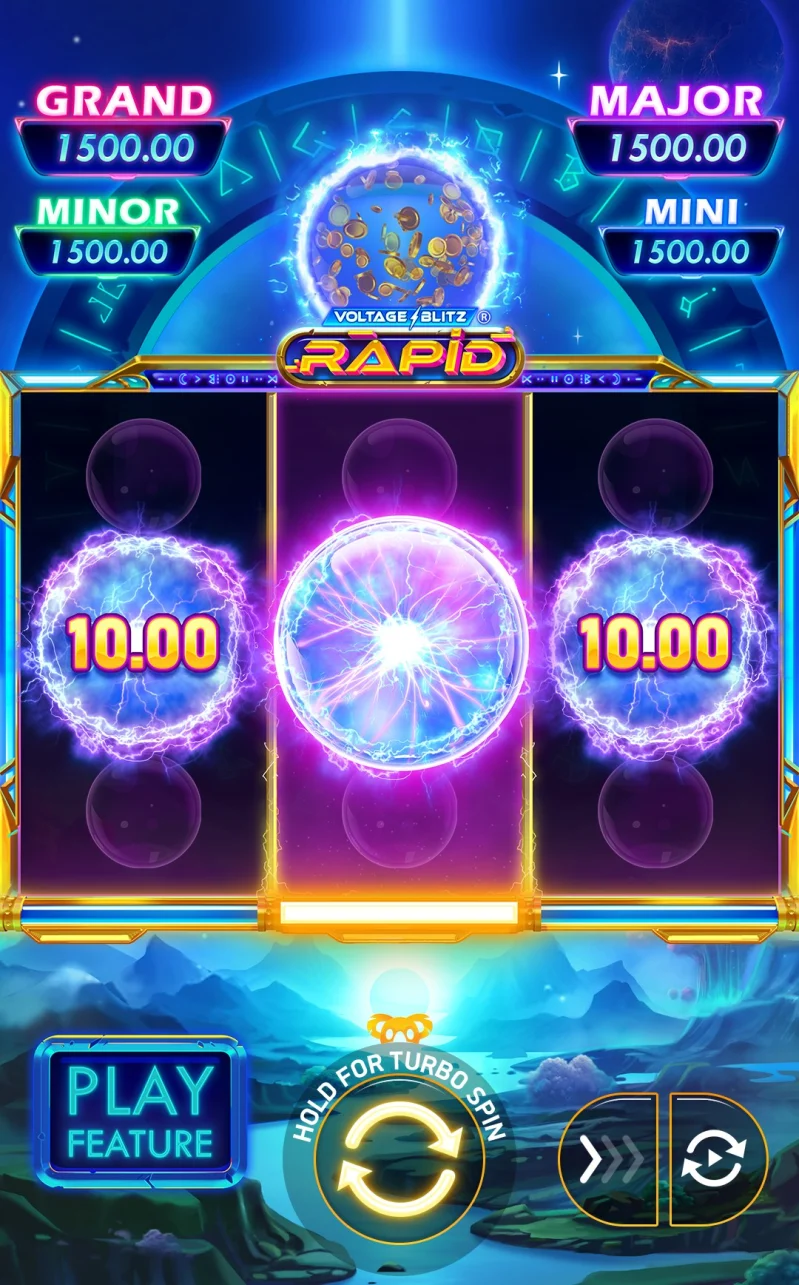
Among Koala Games’ titles, Chris highlighted Voltage Blitz® Rapid and Voltage Blitz® Zeus Up. He said Vortex exceeded the team’s expectations, and the designers noticed players’ interest in prize and collect symbols. In Rapid, they removed other paying symbols and focused on that interaction. The artists needed to retain the recognizable electric elements and vortex while giving the new game its own look; they chose a science-fiction gateway concept for the background. Chris said Rapid became the studio’s most popular game by player count.
In Zeus Up, the game feature expands from three to seven rows. For the central symbol, the team chose a tall character and used a previously unrealized solar flare concept. Instead of the usual blue surroundings, Zeus was placed against a red backdrop with golden lightning. The character was drawn at full height, with his arms on separate layers so the animators could change his pose at different stages.
Australian roots and future plans
Chris sees Australia’s accumulated slot development expertise as one of the country’s advantages. When hiring, he may favor a specialist with many years of experience in the field over a candidate whose portfolio is more impressive at first glance. Remote work has broadened the pool of people the team works with, including specialists from Europe and the United States. At the same time, the studio retains its Australian identity: the studio and game design leads, two senior artists and Chris himself are based in Sydney.
In the interview, published in November 2026, Chris said he hoped to give artists’ individual ideas more room. According to him, a year earlier, early concepts had been handled mainly by one specialist, but by the time of the interview, all the static graphics artists felt confident in that role.
He noted that new tools make it possible to explore character poses and lighting options more quickly under the artists’ direction. In animation, Chris would like to preserve room for small details: a character’s reaction, a humorous moment or another element that brings the scene to life. At the same time, the studio aims to develop its visual language without losing the recognizability of its games.
Source: https://g3newswire.com/koala-games-inside-the-making-of-slots/
Discussion
Sign in or create an account, to join the discussion.