The same query can produce different results depending on the market, language, device, and user context. As AI platforms become more widespread, the challenge for international brands is growing: they need to understand not only their positions in search results, but also how their brand is represented in AI-generated answers and other channels.
Personalization affects how work is organized, how data is shared, and how visibility is measured. At the same time, a consistent brand message must be balanced with cultural differences and the needs of local audiences.
From search results to AI answers
Search engines display more than links: they also show additional elements such as featured snippets, videos, news, and questions from the People Also Ask section. AI Overviews and AI Mode answers have joined them. When the original article was published in January 2026, these were described as tools for informational queries.
The placement of elements and links can differ between mobile devices and computers. Google Search Labs experiments, including Preferred Sources, also show how the presentation of information changes under different conditions.
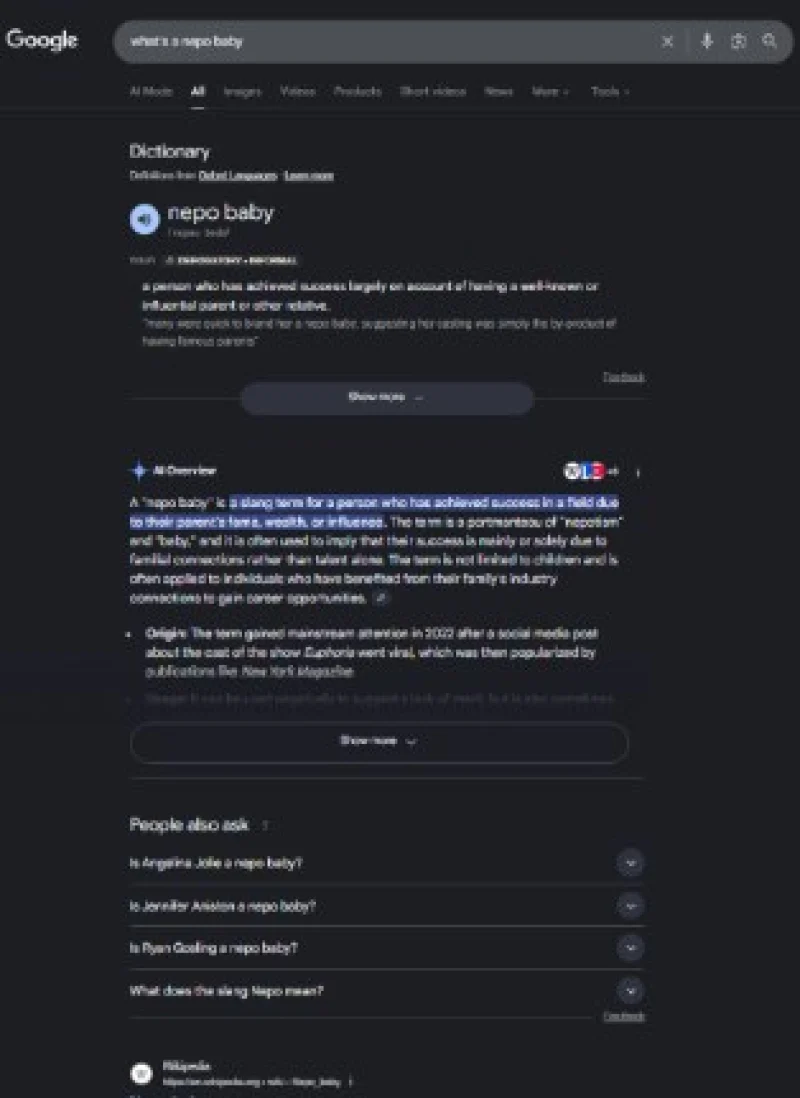
In a conversation with a language model, the answer depends on the context and the user's follow-up questions. The source notes that the type of account can sometimes affect the result as well. It is still unclear, however, what prompts someone to visit the original source or continue searching: curiosity, doubt, a call to action, or the model admitting that it does not know the answer. For marketers, this is a question that complements traditional CTR analysis.
People also discover brands outside search engines. The original article cites a Statista estimate that 78% of internet users worldwide research brands and products on social media. The author also cites McKinsey, according to which 76% of users feel frustrated when an interaction is not personalized.
Which signals influence personalization
In marketing, personalization means adapting content, offers, and the user experience based on available data. In search, results and search features can be influenced by location, language, device type, search behavior, and inferred interests. In AI services, conversation context and, in some cases, saved memory play an additional role.
For example, the query “apples” can refer to either the fruit or Apple products. Results also differ between markets: in an example cited by the source, the query “vote of no confidence” returned different filters and results in Spain and the UK, and the People Also Ask section was absent from the UK version.
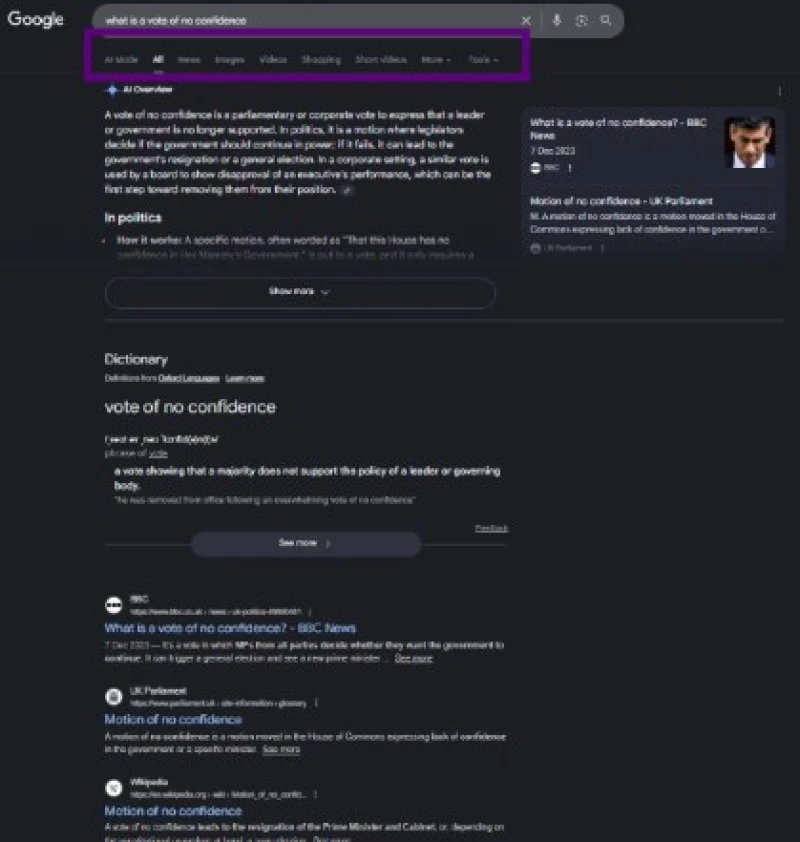

Not all differences between results indicate individual personalization: results can also be affected by market-wide factors such as language or region. International brands therefore benefit from studying both audience segments and the characteristics of individual countries.
Technical layers: search results, entities, and AI memory
Google and Bing can change which search features appear and where they are placed based on device, interactions, and market signals. AI systems, meanwhile, can summarize content from multiple pages, adjust the depth of an answer, and suggest follow-up queries based on the context of the current session and sometimes previous ones.
To improve a brand's presence in AI answers, the source author recommends focusing on a clear site and URL structure, factual accuracy, signals that help systems recognize the brand as an entity, online reputation, and up-to-date content. These measures should be treated as practical guidelines, not a guarantee of being cited.
Structured data helps systems connect information about a brand. Schema markup can reduce the risk of regional sites being interpreted as separate brands. The original article also notes the role of Microsoft Graph in connecting brand data to the Microsoft ecosystem.
A language model's context window determines how much information it can consider at once; its size is measured in tokens. Working with context is what helps maintain coherence in a conversation. Separate memory features can also use information from outside the current conversation. The author suggests that brand-related context may persist for some time, but acknowledges that its duration is unclear.
On e-commerce and content platforms, personalization is complemented by recommendation systems that suggest content or products based on user behavior. AI outputs should also be reviewed and, if necessary, corrected by a person before being used in practice.
The benefits and limitations of personalization
Effective personalization can reduce friction in the user journey and improve satisfaction, engagement, CTR, and conversion. It can also have a positive effect on customer lifetime value. However, the impact depends on interactions being consistent and reliable across channels.
There is a downside too. Filter bubbles can limit exposure to alternative perspectives and competitors, while the use of behavioral and demographic data raises privacy concerns. If the diversity of results decreases, smaller and newer brands may find it harder to attract attention.
A global template does not always suit every market either. Cultural context, motivations, and purchase journeys differ, so a literal translation of a general message may not be enough. Before scaling an approach, it is worth studying the audience, competitors, and local search habits.
How to coordinate work across teams and markets
When global and local teams work in silos, it can lead to inconsistent markup, irrelevant translations, missed queries, and pages that attract audiences with the wrong intent. These inconsistencies can also affect how the brand is represented in search.
A good starting point is to establish shared goals and exchange data: align on business objectives, audience segments, individual market challenges, and insights from different channels. Teams also need to understand how data moves between global and local levels and jointly monitor changes in search and AI.
The technical foundation includes a clear site and page structure, internal links, correct Schema markup, and appropriate hreflang attributes. It is helpful to organize content into topic clusters and align it with user intent, rather than focusing solely on individual keywords.
A company's own data, including information about on-site search and logged-in user behavior, can help make interactions on the site more relevant. Possible applications include product recommendations, dynamic filters, and browsing-based suggestions.
At the same time, the brand's tone, message structure, and key benefits should remain recognizable across social media, email, apps, websites, and on-site search. Consistency does not rule out local adaptation: the key is to preserve the overall meaning while accounting for market-specific needs.
Visibility and trust require coordinated action
To strengthen brand perception, the source author recommends building on the brand's strengths and publishing carefully prepared content with data useful to the target audience. Positive online mentions can also support awareness and trust.
Conway's law is relevant here: organizational systems reflect the structure of their communications. When teams work in isolation, this can manifest as fragmented content and conflicting signals. Managing personalization therefore requires more than SEO settings; it also calls for coordinated work on data, content, and communication in each market.
Discussion
Sign in or create an account, to join the discussion.