How to Choose a Link Building Agency in the Age of AI Search: A 2026 Guide

3 views
How to Choose a Link Building Agency in the Age of AI Search: A 2026 Guide

This content is based on an article sponsored by uSERP. The opinions and examples in the original publication belong to the sponsor.

When choosing a link building agency, comparing the number of links promised or website authority metrics is not enough. In a guide published in January 2026, uSERP suggests also evaluating the audiences of potential publishing sites, the agency’s transparency, and its approach to brand visibility in AI-generated answers.

Why Site Quality Matters More Than Individual Metrics

According to uSERP’s 2025 State of Backlinks report, which surveyed 800 SEO professionals, 67.5% of respondents believed that backlinks influence overall search results. This is a measure of professional opinion, not a measurement of how much links contribute to a site’s rankings.
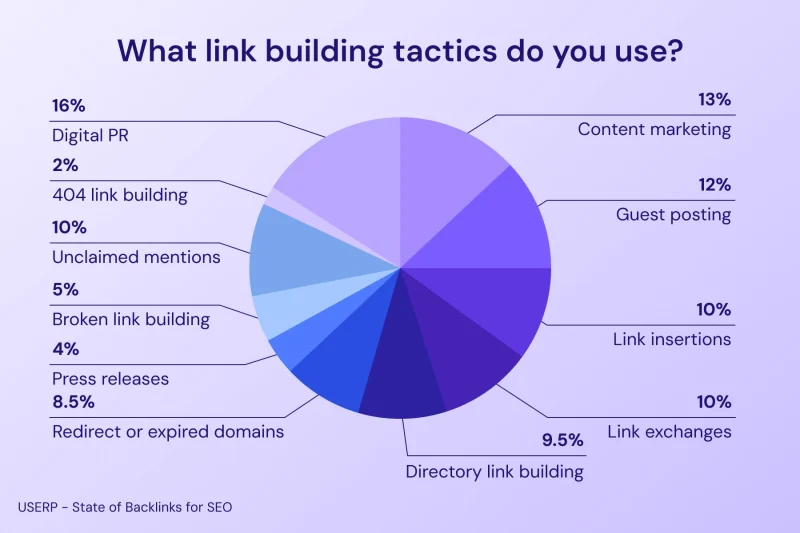
Иллюстрация из первоисточника

The authors recommend against choosing sites based solely on Domain Authority or Domain Rating. It is also worth checking whether a site has a real audience, how relevant its content is to the client’s subject area, and which queries generate its search traffic.

uSERP also suggests considering brand mentions and citations in AI-generated answers. However, a link or mention alone does not prove that the agency’s work caused the brand to appear in an answer.

What to Look for in an Agency

A clear approach to AI visibility. Ask how the agency tracks mentions and citations in services such as ChatGPT and Perplexity, and whether it can show examples of client results. It is important to understand not only which metrics it collects, but also how it explains the relationship between its work and the outcome.

Content and digital PR work. The uSERP report identifies digital PR as the most effective link building tactic in 2025. The original article suggests creating resources that other publications may find useful to link to, such as original research, interactive tools, and expert commentary. As an example, the author cites a salary calculator created for a SaaS brand.

Transparent processes and pricing. An agency should explain how it selects sites and provide reports on publishers, anchor texts, and traffic estimates. It is useful to discuss link tracking, key metrics, and monitoring traffic from content in advance.

According to uSERP, most SEO professionals surveyed spent between $5,000 and $10,000 per month on link building. This is a historical benchmark from the study, not a universal budget for every company. The article treats an offer of 100 links for $500 as a reason to scrutinize the agency’s methods.
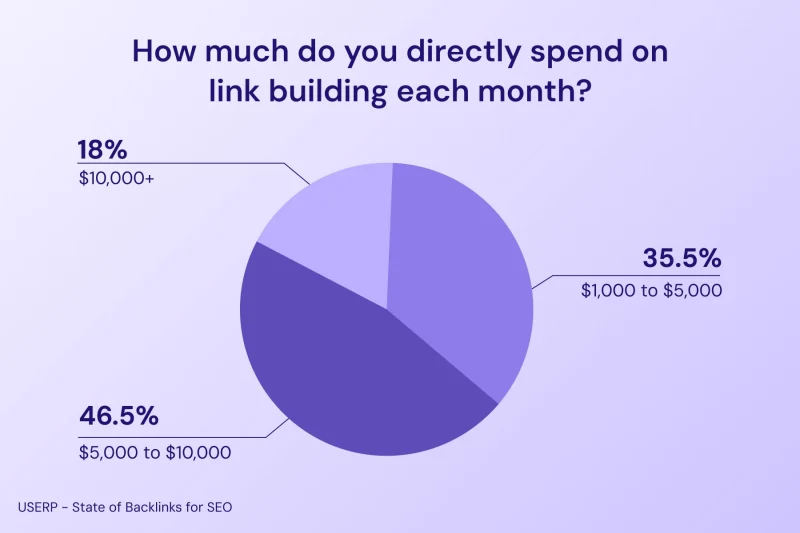
Иллюстрация из первоисточника

Warning Signs

Guarantees of specific rankings. An agency does not control Google’s algorithms, so a promise to get a site to first place in 30 days cannot be considered a reliable guarantee. Rankings are affected by many factors, some of which are unknown.

Network sites and questionable placements. Private blog networks, or PBNs, created to pass link equity, and link farms violate Google’s search spam policies. The article also advises caution if an agency offers placements on hacked or low-quality sites.

Mass-produced outreach emails. Identical emails sent to journalists and site owners may be ignored or marked as spam. It is worth finding out how the agency tailors its outreach to individual recipients.

Failure to monitor links. According to Ahrefs data cited in the publication, 66.5% of links from the period between 2013 and 2024 had disappeared by the time of the study. Ask whether the agency monitors lost links and what it does to recover or replace them.
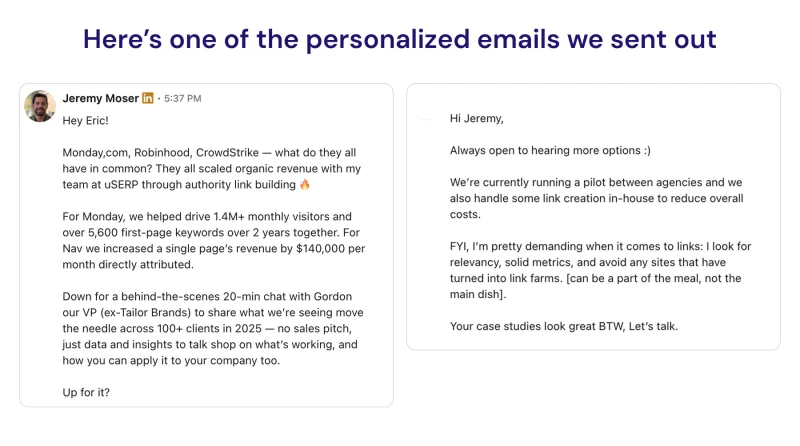
Иллюстрация из первоисточника

What to Ask Before Signing a Contract

Ask a prospective agency how it checks site traffic, keyword rankings, and signs of spam. Find out whether it can show examples of clients’ visibility in AI Overviews and explain how it measures results in AI services.

Discuss timelines and measures of success beyond DR growth: organic and referral traffic, link profile analysis relative to competitors, and the stages of work. Separately agree on whether lost links will be replaced and under what conditions.

The original article cites data from BuzzStream’s 2025 State of Digital PR report: most campaigns deliver results within three to six months. The authors also note that traffic can sometimes change quickly after a serious technical problem is fixed, but consider this a rare exception.

How to Evaluate Reported Results

As an example, uSERP describes its work with monday.com. According to the sponsor, the company sought help with content production and PR despite having more than 100 in-house SEO professionals. uSERP says the team focused on untapped keywords, content, and links, including links from Crunchbase and G2.

The reported result was a 77.84% increase in traffic, to more than 1.2 million visitors per month. This example was presented by the agency itself; the original publication does not provide enough detail to independently assess the contribution of each type of work.

uSERP estimates that the first signs of results from quality link building can appear after 60–90 days, with the full effect taking 6–12 months. When choosing a partner, treat these timelines as the sponsor’s estimates and discuss metrics, measurement methods, and each party’s responsibilities before work begins.

Source: https://www.searchenginejournal.com/link-building-agency-red-flags-userp-spa/564424/

Discussion

Sign in or create an account, to join the discussion.

JOIN THE ULTRAS

A Telegram channel with exclusive case studies you won't find on the site and the most hard-hitting market insights.

SUBSCRIBE ON TELEGRAM

Traffic arbitrage made simple — articles, news and case studies


Imagine earning money online simply by directing traffic and getting paid for every successful conversion. No product of your own, no office, no bosses. Sounds like a fairy tale? In fact, it’s traffic arbitrage, and for many, it has already become a steady source of income, bringing in hundreds to thousands of dollars a day. But in this field, knowledge is just as important as practice. Where can you find setups that work? How do you avoid wasting your budget? Where can you learn strategies from the pros?

There’s one answer: read traffic arbitrage articles on Traffic Ultras, a niche media outlet. Here, you can make sense of trends, find proven case studies and learn from mistakes. You’ll also find everything you need to know to get started if you’re just entering the world of traffic arbitrage.

CPA arbitrage – articles everyone should read


Today, CPA arbitrage articles are more than just content: they’re comprehensive guides that can replace courses and consultations. They’re written by active media buyers, tested in practice and cover the full range of arbitrage work: from setting up trackers and collecting analytics to scaling setups and launching large teams.

These articles are packed with practical advice:

  • how to prepare a setup around a news event,
  • how to analyze results and optimize creatives,
  • how to choose the right offer without wasting your budget,
  • which details to pay attention to.

You can also find unique case studies involving Facebook, Google, TikTok, UAC and even native advertising.

Important: if you want to understand how to start earning from traffic arbitrage, start by reading these resources. Our site has a convenient structure and internal links. For example, after reading about launching a campaign on TikTok, you can go to an article on warming up accounts or visit the traffic arbitrage forum to ask questions directly.

A traffic arbitrage blog by practitioners

What makes a traffic arbitrage blog truly valuable? It’s not theory, but hands-on experience, real traffic and concrete numbers. There’s no fluff here — just proven methods and up-to-date approaches. This kind of content lets you do more than read: you can apply what you learn to your own work. It’s especially useful if you’re already taking your first steps but don’t know how to get the most out of Facebook or properly test push and pop networks.

A modern traffic arbitrage blog is more than just articles; it’s a complete media ecosystem. Traffic Ultras tracks gambling news, trends across verticals and new approaches to creatives, helping our readers stay up to date on the latest strategies.

You can also find partners, frameworks, scripts and even a team through a traffic arbitrage blog. Collaborations emerge in comments and chats, while media buyers share ideas and experience.

Traffic arbitrage – a blog for beginners

If you’re just starting out, a beginner-friendly traffic arbitrage blog is the best way to enter the industry. This kind of content is easy to follow without sacrificing usefulness, covering everything from terminology to launching your first campaign.

A traffic arbitrage blog helps you avoid classic mistakes: wasting your budget on poor pre-landers, ineffective bridge pages and offers that don’t get approved. It explains the mistakes beginners make, how to communicate with CPA network managers and how to avoid getting banned on Facebook with your first campaign. It’s all based on the authors’ real-world experience.

You’ll also find step-by-step instructions, useful checklists and sometimes free templates and trackers. This makes traffic arbitrage blogs especially useful both when you’re starting out and as you grow. They also regularly publish news to help readers keep up with their vertical.

A good traffic arbitrage blog is a guide to the world of traffic that shows: anyone can earn money by taking a systematic, consistent approach.

Questions and Answers

How do you start earning from traffic arbitrage? Articles and blogs to help beginners

If you don't know where to start, check out the CPA arbitrage articles on our site, which explain the basics of arbitrage and how to work with offers and traffic sources in detail. A traffic arbitrage blog can also be a great resource, with experienced media buyers sharing case studies and tips that even beginners can understand.

Which traffic sources are most effective in 2025, according to arbitrage blogs?

An analysis of leading traffic arbitrage blogs reveals several key sources in 2025: TikTok Ads, push traffic, Telegram Ads, and YouTube Shorts. Formats that generate engagement quickly are particularly effective, and traffic arbitrage articles are increasingly focusing on these channels.

Which verticals generate the most revenue, according to traffic arbitrage blogs?

According to authors of popular traffic arbitrage blogs, the most profitable verticals in 2025 are gambling, Nutra, dating, and crypto. An arbitrage blog helps beginners quickly learn the ins and outs of each vertical, including rules for creatives and approaches.

Which arbitrage blog publishes real case studies?

The most valuable resources present each case study as a step-by-step story, from testing to ROI. That's how the Traffic Ultras arbitrage blogs are created: by practitioners who share not only their successes but also their failures, helping readers learn from others' experiences.